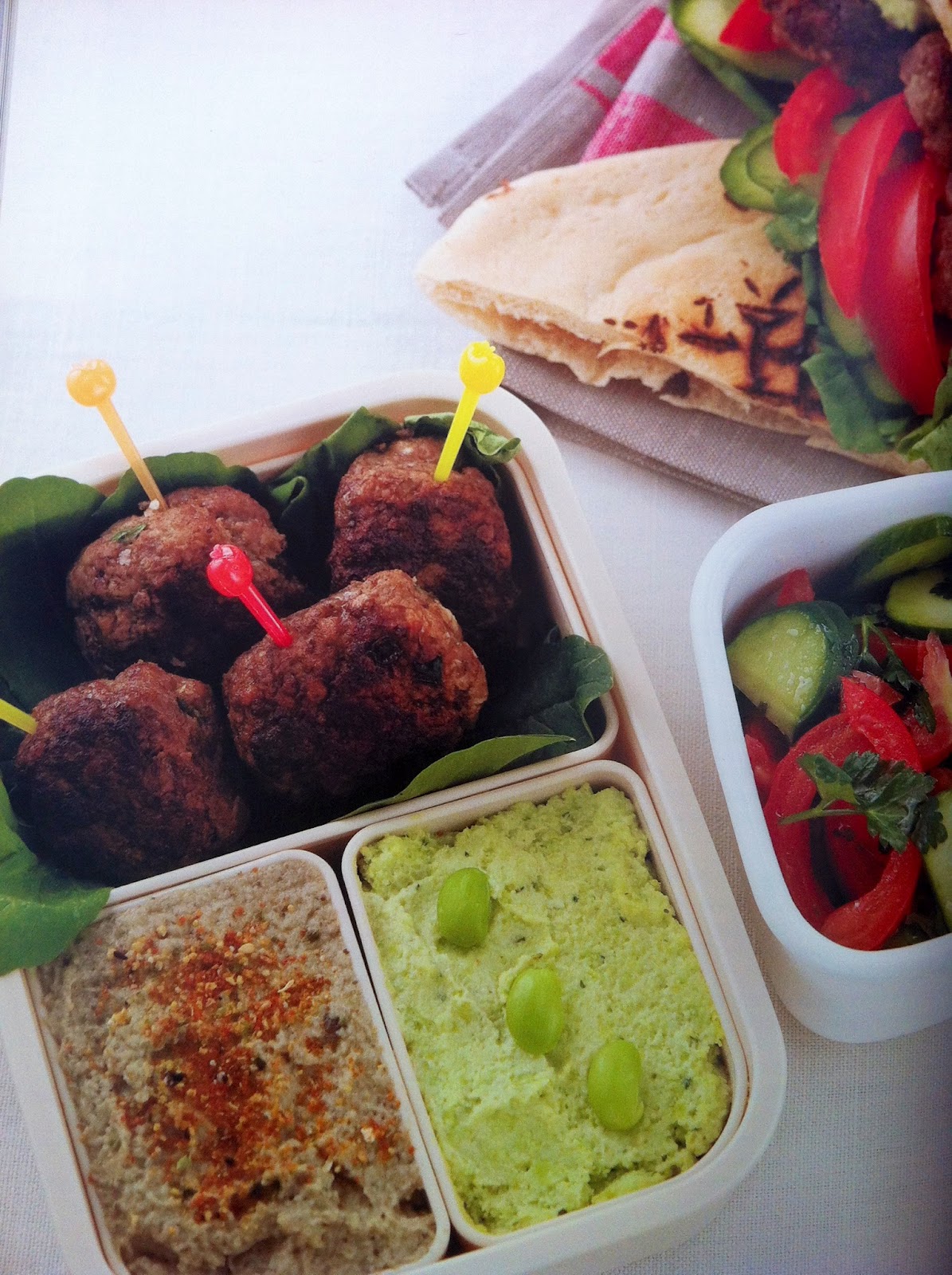
Yum-Yum Bento Box, by Crystal Watanabe and Maki Ogawa.
Charaben, (character-themed bentos) are the focus of this book. Don't expect sophisticated dishes or unusual combinations. This book relies on old standbys that appeal to young kids. The presentation of these foods, however, are what make it special.
This book was authored by two mothers, and it is obvious they agree with the popular idea that bentos can be used as expressions of love for children. Every bento featured is tiny and perfect for little fingers.
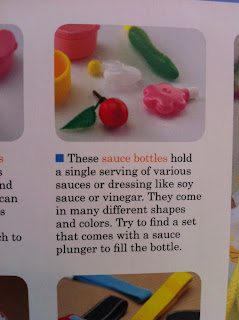

Of course the book starts off with a brief history of bentos as well as a photographic list of different supplies you can use in your bento. Because this is a book for kids, the supplies are especially bright and colorful and cheerful. They are great fun to look at.

The bentos are divided up into "Cuties and Critters", "Fairytale Friends" and "Special Day Treats". Each bento has a full-page photo of the finished bento, with a brief description of what's in it as well as recipes for the food on the opposite page. The recipes are fairly simple. Rice balls, grilled cheese, spaghetti, etc. Occasionally it will call for things like making hamburger patties.
The back of the book does contain additional recipes which are a bit more involved, but still very easy.

Helpful tips given by cute vegetable characters add to the appeal. Some of the bentos, which require more elaborate food characters, have step-by-step instructions to do so. For example, one bento shows you exactly how to cut octopi out of sausages.

It's amazing how cute you can make these using everyday ingredients and some imagination.
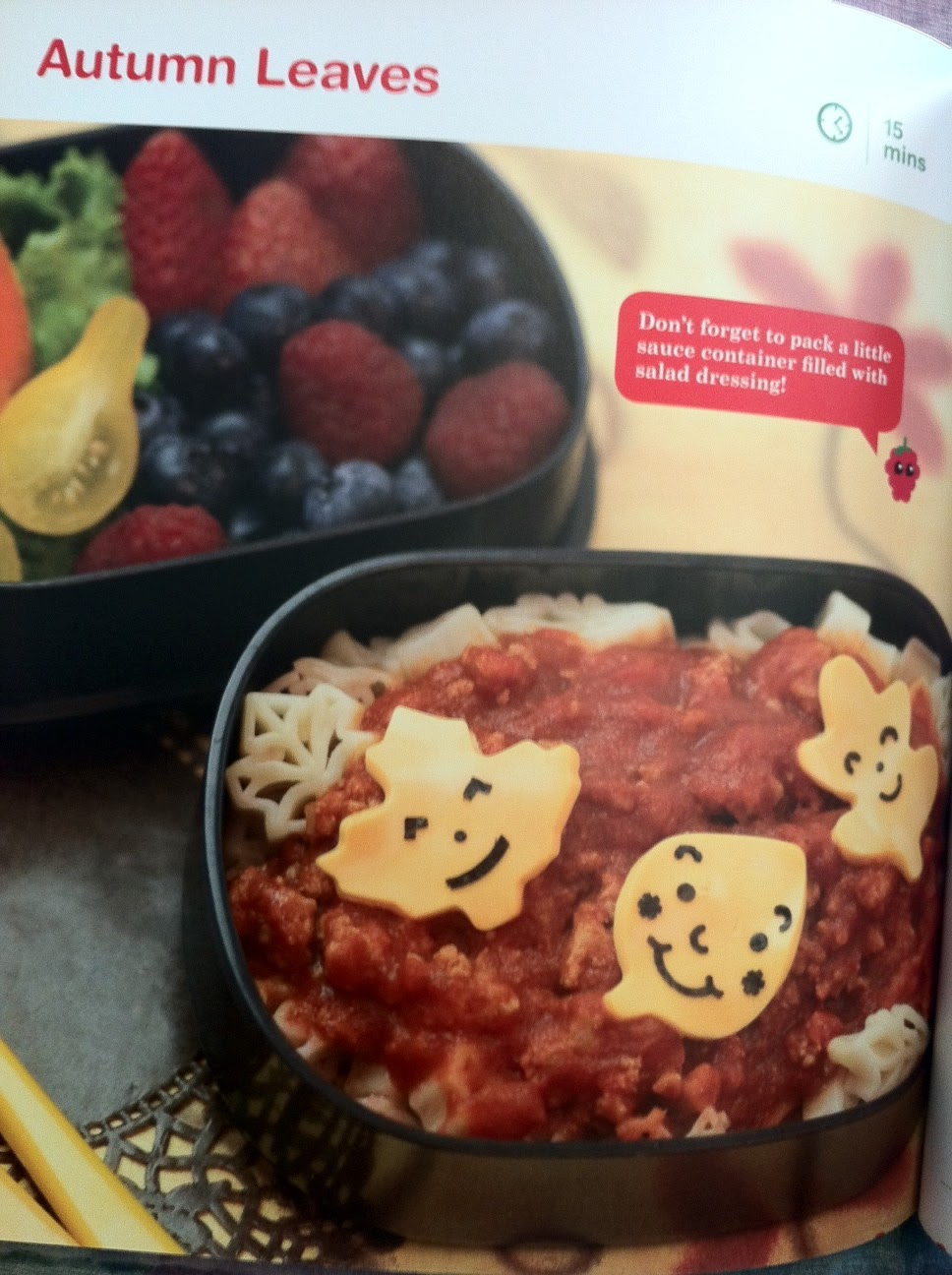

Now, on to the flaws. This book is adorable and helpful, but by no means perfect. As Little Red Riding Hood shows up above, some of the bento are photographed in such a way that the front is sharply focused, but the back of the bento is fuzzy. I can tell those are strawberries, and I'm guessing a pink rice ball, but what is that brown stuff? I can read the ingredient list to figure it out but I still don't know how it's supposed to look. While this isn't terribly confusing, I still think bentos (especially if you're a beginner) are much more effective when the whole thing is in focus and you can see all the little details. The first bento book I reviewed was great about this.
The recipes themselves are usually only for one or two portions. A few do make enough servings for a whole family, but the majority of these are not. Making an entirely separate meal for one's children is time-consuming. I would have liked it much better if they had all family-sized meal recipes and suggested ways to divide it up so kids get healthy portions. Though with a little tweaking, I'm sure one could do this on their own easily enough without the help of the book.
Obviously this nitpick is referring to actual recipes, not things like sandwiches.
The food used makes me raise my eyebrows a bit. Plenty of fruit and veggies and rice, yes, but also a lot of processed cheese, sausage, bologna, some fried versions of dishes, and SPAM. I'm not feeding my children SPAM. I don't care if it's an old standby and if it's popular in bentos. (Tidbit: Apparently SPAM is extremely popular in Hawaii). Also, for me at least, any pork products are a no go. I'm not going to condemn the book for failing to meet my personal dietary needs, the same way I wouldn't be angry if I needed vegetarian dishes, but the fact so many processed cheeses and meats are used is rather off-putting. I want my kids to eat as healthy as possible.
Listen to me...I don't even have kids yet and I'm pulling the "Only the best food for MY babies!" stuff.
So much emphasis is placed on making the individual parts of the bento that there are really no photographic tips for actually packing the bento and putting it all together. Though the bentos are pretty simple in terms of the amount of dishes in each one, showing which food to put in first would be very helpful.....written instructions for packing the bento are included for each one though, so I admit this is a small nitpick. I just prefer visual reference.
One more thing. I was able to get a gently-used copy for $7, but the retail of this book is $16.95. In my opinion, that's a bit much. The book is 143 pages, but its dimensions are a bit on the small side. I can get huge, hardcover books for only a few dollars more.
In summary, this book offers very cute inspiration that is sure to delight your children....but inspiration is the main positive tribute in my opinion. If you are creative enough to figure out how to assemble bentos on your own and you don't mind a little tweaking, this could be perfect for you. I will probably swap out the processed foods with foods I've picked myself and use the ideas featured to decorate the bentos I make.
And hey, if the food featured doesn't bother you, you'll probably love this book completely! Pick up a copy if you can find it for cheap. Just flipping through it will probably brighten your day.
Disclaimer: The book Yum-Yum Bento Box, its content and photos, are copyrighted Crystal Watanabe, Maki Ogawa, the publisher, and any other creators. Pictures and content featured here are for the purpose of personal review only and no copyright infringement is intended.